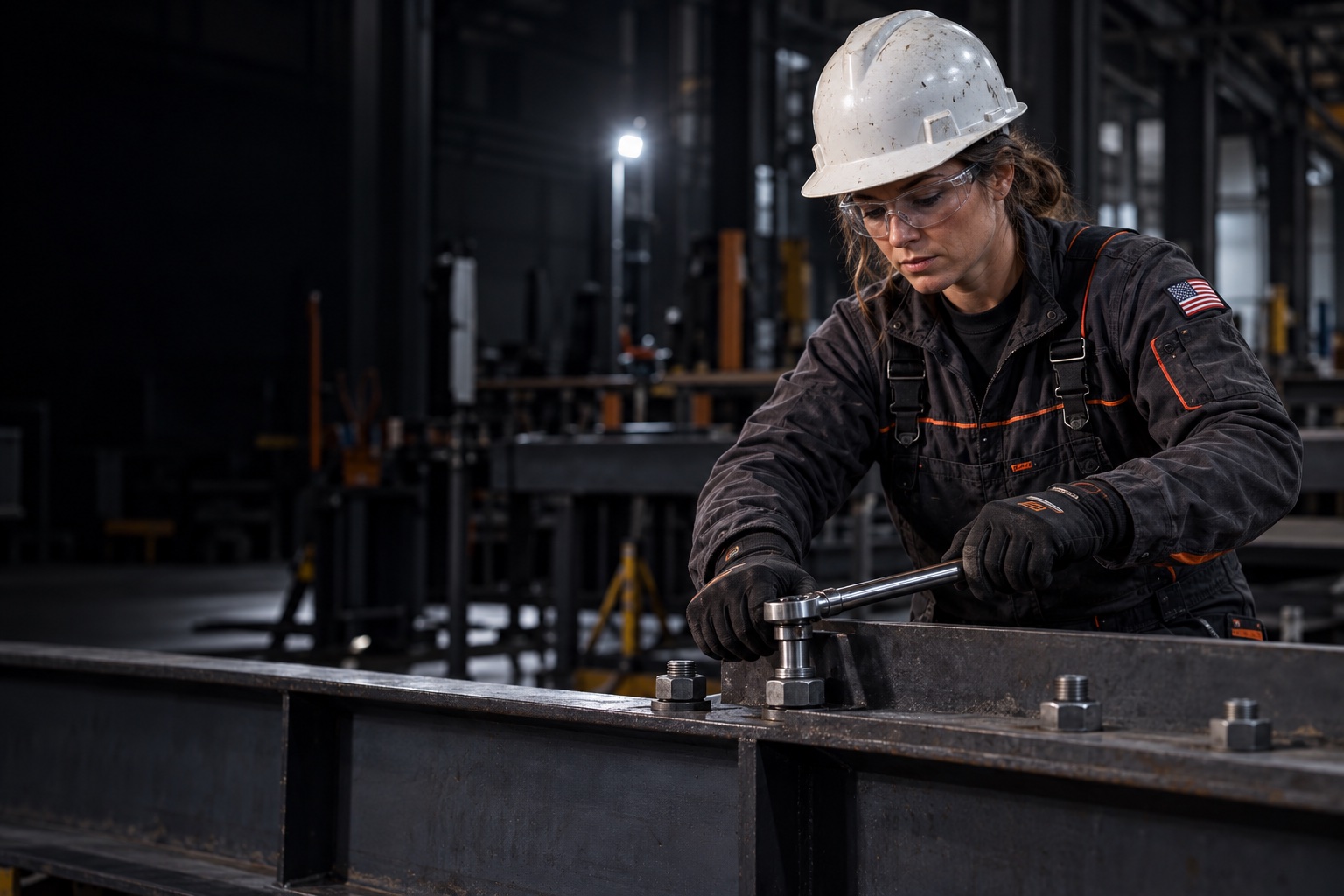
Blue-collar AI and skilled trades AI equip staffing firms and recruiting teams with specialized AI recruiting agents built around hands-on work. On the VeroSkills AI recruiting platform, fleets of AI agents automate 90% of early recruiting—sourcing, two-way SMS and email outreach, preliminary AI interviews, and calendar scheduling—while human recruiters own every hiring decision.
Built for the jobsite, the plant floor, and the staffing desk.
- Blue-collar AI is engineered for how skilled tradespeople actually work—reaching candidates by mobile text and email outside shift hours rather than waiting for desktop applications.
- Skilled trades AI goes deeper than a two-word job title, asking candidates about voltages, welding processes, CNC tolerances, piping systems, and shift preferences.
- Human recruiters receive a scheduled meeting alongside a structured work history, interview summary, notes, and recording synced to Bullhorn, Avionté, JobDiva, and any other ATS system.
What is blue-collar AI and how does it work in recruiting?
In workforce staffing, blue-collar AI refers to artificial intelligence built specifically for recruiting, screening, and coordinating the physical and industrial workforce. Unlike corporate office software designed around polished PDF résumés and daytime desk availability, a blue-collar AI recruiting platform respects the reality of field and plant work.
According to the U.S. Bureau of Labor Statistics Occupational Outlook Handbook and American Staffing Association research, industrial and skilled-trades staffing agencies face persistent annual demand across essential occupations—including 72,700 annual openings for electricians, 48,600 annual openings for plumbers, pipefitters, and steamfitters, and 40,600 annual openings for HVAC technicians. VeroSkills automates the first 90% of the recruiting workflow so human recruiters spend 100% of their day talking with qualified people.
How does skilled trades AI evaluate hands-on experience across trades?
A job title on a résumé rarely tells a staffing recruiter whether a candidate matches a client’s job order. Skilled trades AI conducts a conversational preliminary AI interview tailored to the trade, shift, pay, and project environment so the human recruiter starts with concrete trade context.
| Skilled trade / vertical | Projected U.S. demand (BLS) | What a 2-word résumé title misses | What VeroSkills skilled trades AI captures |
|---|---|---|---|
| Electricians | 72,700 openings/year (9% growth, 2025–2035) | Residential wiring vs. 480V 3-phase industrial power, rigid conduit bending, PLC panels, and switchgear. | Conduit types bent, voltage systems terminated, blueprint reading, licensing, and commercial or industrial site history. |
| Welders & fabricators | 45,000+ annual openings across fabrication & construction | Specific welding processes (MIG/GMAW, TIG/GTAW, Stick/SMAW, Flux-Core/FCAW), positions (3G, 6G), and metals. | Processes, carbon vs. stainless or aluminum experience, structural vs. pipe welding, and shop drawing layout. |
| HVAC & refrigeration | 40,600 openings/year (11% growth, 2025–2035) | Residential split systems vs. commercial rooftop units (RTUs), chillers, boilers, VRF, and EPA 608 certifications. | Equipment tonnage, commercial service vs. new construction install, brazing, low-voltage controls, and on-call availability. |
| Machinists & CNC operators | 35,000+ annual openings across precision manufacturing | Button-pushing production operation vs. full CNC setup, tooling offsets, G-code edits, and tight-tolerance inspection. | 3-axis vs. 5-axis mills and lathes, Fanuc/Haas/Mazak controls, setup independence, and micrometer/caliper/CMM inspection. |
| Pipefitters & plumbers | 48,600 openings/year across construction & industrial plants | Piping materials (carbon steel, stainless, copper, PVC), joining methods, and isometric blueprint layout. | Threaded, grooved, soldered, brazed, or welded systems, commercial rough-in vs. industrial process piping, and shift fit. |
| Industrial maintenance | 50,000+ annual openings for maintenance & millwright roles | Mechanical preventive maintenance vs. multi-craft electrical, hydraulics, pneumatics, conveyors, and PLC troubleshooting. | Plant environments supported, mechanical vs. electrical ratio, 3-phase motors, VFD/PLC diagnostics, and shift rotation. |
How do blue-collar AI recruiting agents support both staffing firms and job seekers?
Blue-collar AI works best when it respects both sides of the hiring conversation: the staffing recruiter managing dozens of open client requisitions, and the skilled tradesperson looking for work that fits their skills, shift, and pay.
For staffing firms: 90% automated preparation.
AI recruiting agent swarms identify candidates, initiate SMS and email outreach, conduct preliminary trade interviews, and book qualified people directly onto the recruiter’s calendar—turning an 80-day open requisition into 3 qualified candidates in 3 days and 1 hire (watch the 2:41 walkthrough).
For job seekers: a real conversation on your schedule.
Tradespeople invited to a VeroSkills conversation can talk through their real hands-on experience from their phone—before or after a shift—without needing a polished corporate résumé. Job seekers can learn more or reach out directly on our For Job Seekers hub.
For human recruiters: every relationship and decision stays human.
The recruiter handoff delivers a candidate-reported work history, interview summary, structured notes, and full recording so the recruiter can focus 100% on the person and the placement decision.
Frequently asked questions about blue-collar AI and skilled trades AI.
What is blue-collar AI in staffing and recruiting?
Blue-collar AI in recruiting refers to specialized AI recruiting agents and platforms built for the physical workforce—construction, manufacturing, electrical, welding, HVAC, machining, plumbing, industrial maintenance, transportation, and frontline medical support. At VeroSkills, blue-collar AI automates candidate sourcing, SMS and email outreach, preliminary AI interviews, and recruiter calendar scheduling.
How does skilled trades AI differ from white-collar recruiting AI?
White-collar recruiting AI relies on desktop résumé keywords and LinkedIn profiles. Skilled trades AI is designed for workers on jobsites and plant floors: AI recruiting agents reach candidates by text or email on their schedule and conduct a conversational preliminary interview about specific tools, equipment, voltages, materials, and shifts before booking a human recruiter call. See the full comparison matrix →
Which trades and industries does VeroSkills’ blue-collar AI platform support?
VeroSkills supports staffing firms and recruiting teams hiring across industries and skilled trades, including construction, manufacturing, industrial engineering and maintenance, transportation and hauling, drone operations, and frontline medical support—covering electricians, welders, HVAC technicians, CNC machinists, pipefitters, and plumbers.
How does blue-collar AI work for job seekers who receive a text or email?
When a tradesperson receives a text or email invitation from a VeroSkills AI recruiting agent on behalf of a staffing firm, they can complete a short voice or text conversation from their phone whenever it fits their shift. Their hands-on experience is organized into a clear work history and scheduled directly with a human recruiter. Explore the candidate journey →
Put blue-collar AI recruiting agents to work for your team.
See how VeroSkills connects candidate sourcing, outreach, preliminary AI interviews, and recruiter calendar scheduling across the skilled trades.